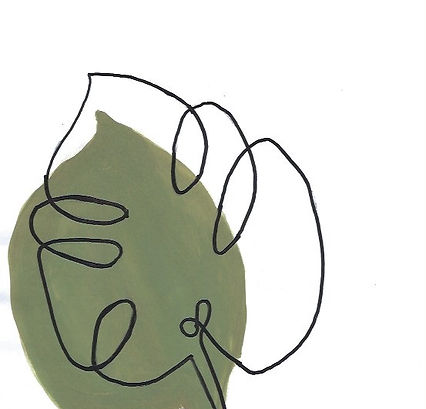
Object, Plant & Animal Simulacrum and Supposed Figures
Back
What happens when an image is stripped of everything unnecessary?
This body of work is an exploration of recognition, symbolism, connection, and the quiet poetry of familiar things we encounter every day. Through three interconnected series—Object, Plant and Animal Simulacrum, and Supposed Figures—the artist transforms ordinary objects, plants, animals, and human forms into their most essential visual language.
The word simulacrum describes an image, likeness, or representation of something—a reflection of a recognizable reality without necessarily attempting to replicate it in its entirety. In the Object, Plant and Animal Simulacrum series, familiar forms are distilled until only their visual essence remains. What is left is not simply an object, plant, or animal, but an invitation to consider what it represents: its purpose, its function, its cultural significance, and the layers of meaning it has accumulated throughout mythology, religion, history, tradition, and human experience.
The titles of the individual drawings become another layer of language. They speak to the symbolic lives these familiar forms have carried across civilizations. An ordinary object can become a vessel for memory. A plant can embody renewal. An animal can represent strength, transformation, protection, or spirit. Through these associations, the commonplace becomes something larger than itself.
Supposed Figures series moves from recognition toward suggestion. Here, the human figure is neither fully described nor completely revealed. Instead, a few lines imply a presence—a body, a gesture, a moment, a person. These are supposed figures: forms that exist somewhere between what is seen and what is imagined. The viewer is invited to complete them, allowing perception and imagination to become part of the work itself. What is absent becomes just as important as what is present.
Each drawing is created with one continuous line. The line does not begin and end so much as move, wander, and connect. It becomes a metaphor for existence itself—a reminder that seemingly separate things are part of something larger. The uninterrupted line symbolizes our shared connection: person to person, human to nature, object to memory, past to present. Though each image appears to stand alone, the line suggests that nothing truly exists in isolation.
The simplicity of the work is intentional. In a world increasingly filled with information, distraction, and visual noise, these drawings ask the viewer to resist the impulse to search for complexity. They ask us to look without dissecting, to see without overthinking, and to experience the image as a whole rather than becoming lost in its individual details.
The artist invites the viewer to reconsider the familiar—not as something insignificant because it is commonly seen, but as something worthy of renewed attention. The objects, plants, animals, and figures represented here have accompanied humanity throughout time. They have served us, inspired us, protected us, nourished us, frightened us, comforted us, and carried meaning from one generation to the next.
By reducing these forms to a single continuous line, the artist does not seek to diminish them, but to reveal them. The absence of detail creates space for contemplation. The simplicity creates room for meaning.
Ultimately, this work is an invitation to look again.
To find significance in what we often overlook.
To embrace the familiar for what it is—and to remember that beneath the complexity of the world, there are essential forms, shared symbols, and continuous connections that have always been there.